
Articles by Lisa Zyga
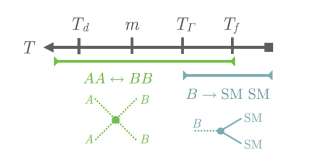
Phys.org / The case for co-decaying dark matter
(Phys.org)—There isn't as much dark matter around today as there used to be. According to one of the most popular models of dark matter, the universe contained much more dark matter early on when the temperature was hotter. ...

Phys.org / Proposed quantum nano-MRI could generate images with angstrom-level resolution
(Phys.org)—Similar to the way that a conventional magnetic resonance imaging (MRI) machine uses large magnets to generate 3D images, physicists have developed a proposal for a quantum nano-MRI machine that would use the magnetic ...

Phys.org / Quantum physics offers new way to factor numbers
(Phys.org)—Any number can, in theory, be written as the product of prime numbers. For small numbers, this is easy (for example, the prime factors of 12 are 2, 2, and 3), but for large numbers, prime factorization becomes ...

Phys.org / New 3-D structure shows optimal way to divide space
(Phys.org)—Researchers have discovered a new 3D structure that divides space into 24 regions, and have shown that it is the best solution yet to a modified version of a geometrical space-partitioning problem that has challenged ...

Phys.org / Thermoelectric paint enables walls to convert heat into electricity
(Phys.org)—Paint these days is becoming much more than it used to be. Already researchers have developed photovoltaic paint, which can be used to make "paint-on solar cells" that capture the sun's energy and turn it into ...

Phys.org / Superlattice of single-atom magnets aims for ultimate limit of high-density data storage
(Phys.org)—Scientists have fabricated a superlattice of single-atom magnets on graphene with a density of 115 terabits per square inch, suggesting that the configuration could lead to next-generation storage media.

Phys.org / Dark matter may be hiding in a hidden sector
(Phys.org)—Currently, one of the strongest candidates for dark matter is weakly interacting massive particles, or WIMPS, although so far this hypothetical particle has not yet been directly detected. Now in a new study, physicists ...

Phys.org / Taking statistics to the quantum domain
(Phys.org)—The change point problem is a concept in statistics that pops up in a wide variety of real-world situations, from stock markets to protein folding. The idea is to detect the exact point at which a sudden change ...

Phys.org / Model offers insight into how life continues to evolve
(Phys.org)—One of the most puzzling things about evolution is that, even after 4 billion years, it hasn't stopped. Instead of culminating in a single best adapted species, today the Earth contains an estimated 8.7 million ...

Phys.org / Scientists overcome bottleneck in fabricating quantum dot displays
(Phys.org)—Although quantum dots were discovered in the 1980s, so far there have been no widespread commercial applications of these nano-sized light-emitting semiconductor particles. The main problem is that quantum dots ...

Phys.org / Shocks in the early universe could be detectable today
(Phys.org)—Physicists have discovered a surprising consequence of a widely supported model of the early universe: according to the model, tiny cosmological perturbations produced shocks in the radiation fluid just a fraction ...

Phys.org / Did 40-year-old Viking experiment discover life on Mars?
(Phys.org)—In 1976, two Viking landers became the first US spacecraft from Earth to touch down on Mars. They took the first high-resolution images of the planet, surveyed the planet's geographical features, and analyzed the ...

Phys.org / How quantum effects could improve artificial intelligence
(Phys.org)—Over the past few decades, quantum effects have greatly improved many areas of information science, including computing, cryptography, and secure communication. More recently, research has suggested that quantum ...
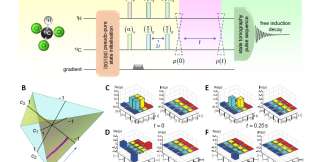
Phys.org / Forever quantum: physicists demonstrate everlasting quantum coherence
(Phys.org)—Physicists have implemented the first experimental demonstration of everlasting quantum coherence—the phenomenon that occurs when a quantum system exists in a superposition of two or more states at once. Typically, ...

Phys.org / Self-learning computer tackles problems beyond the reach of previous systems
(Phys.org)—Researchers have developed a neuro-inspired analog computer that has the ability to train itself to become better at whatever tasks it performs. Experimental tests have shown that the new system, which is based ...
