
Articles by Lisa Zyga

Phys.org / How small can superconductors be?
For the first time, physicists have experimentally validated a 1959 conjecture that places limits on how small superconductors can be. Understanding superconductivity (or the lack thereof) on the nanoscale is expected to ...

Phys.org / Quantum shortcuts cannot bypass the laws of thermodynamics
(Phys.org)—Over the past several years, physicists have developed quantum shortcuts that speed up the operation of quantum systems. Surprisingly, some of these shortcuts theoretically appear to enable systems to operate nearly ...

Phys.org / Nanoscale logic machines go beyond binary computing
(Phys.org)—Scientists have built tiny logic machines out of single atoms that operate completely differently than conventional logic devices do. Instead of relying on the binary switching paradigm like that used by transistors ...

Phys.org / Physicists extend quantum machine learning to infinite dimensions
Physicists have developed a quantum machine learning algorithm that can handle infinite dimensions—that is, it works with continuous variables (which have an infinite number of possible values on a closed interval) instead ...

Phys.org / Electrically tunable metasurfaces pave the way toward dynamic holograms
(Phys.org)—Dynamic holograms allow three-dimensional images to change over time like a movie, but so far these holograms are still being developed. The development of dynamic holograms may now get a boost from recent research ...

Phys.org / Chiral superconductivity experimentally demonstrated for the first time
(Phys.org)—Scientists have found that a superconducting current flows in only one direction through a chiral nanotube, marking the first observation of the effects of chirality on superconductivity. Until now, superconductivity ...

Phys.org / Scientists solve puzzle of turning graphite into diamond
(Phys.org)—Researchers have finally answered a question that has eluded scientists for years: when exposed to moderately high pressures, why does graphite turn into hexagonal diamond (also called lonsdaleite) and not the ...

Phys.org / Physicists investigate erasing information at zero energy cost
(Phys.org)—A few years ago, physicists showed that it's possible to erase information without using any energy, in contrast to the assumption at the time that erasing information must require energy. Instead, the scientists ...

Phys.org / Proposed test would offer strongest evidence yet that the quantum state is real
(Phys.org)—Physicists are getting a little bit closer to answering one of the oldest and most basic questions of quantum theory: does the quantum state represent reality or just our knowledge of reality?
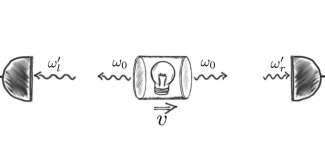
Phys.org / Friction in the vacuum?
(Phys.org)—When three physicists first discovered through their calculations that a decaying atom moving through the vacuum experiences a friction-like force, they were highly suspicious. The results seemed to go against ...

Phys.org / Battery can be recharged with carbon dioxide
(Phys.org)—Researchers have developed a type of rechargeable battery called a flow cell that can be recharged with a water-based solution containing dissolved carbon dioxide (CO2) emitted from fossil fuel power plants. The ...

Phys.org / Never-before-seen topological solitons experimentally realized in liquid crystals
(Phys.org)—Physicists have discovered that dozens of 3-D knotted structures called "topological solitons," which have remained experimentally elusive for hundreds of years, can be created and frozen for long periods of time ...

Phys.org / The thermodynamics of learning
(Phys.org)—While investigating how efficiently the brain can learn new information, physicists have found that, at the neuronal level, learning efficiency is ultimately limited by the laws of thermodynamics—the same principles ...

Phys.org / No ink required: paper can be printed with light
(Phys.org)—In an effort to curb the adverse environmental impacts of paper production, researchers in a new study have developed a light-printable paper—paper that can be printed with UV light, erased by heating to 120 °C ...

Phys.org / Scientists uncover universal features of 'first passage under restart'
(Phys.org)—Discovering the ways in which many seemingly diverse phenomena are related is one of the overarching goals of scientific inquiry, since universality often allows an insight in one area to be extended to many other ...
