As extreme heat tightens its grip, farms and food security face a punishing new reality

Gaby Clark
Scientific Editor

Robert Egan
Associate Editor
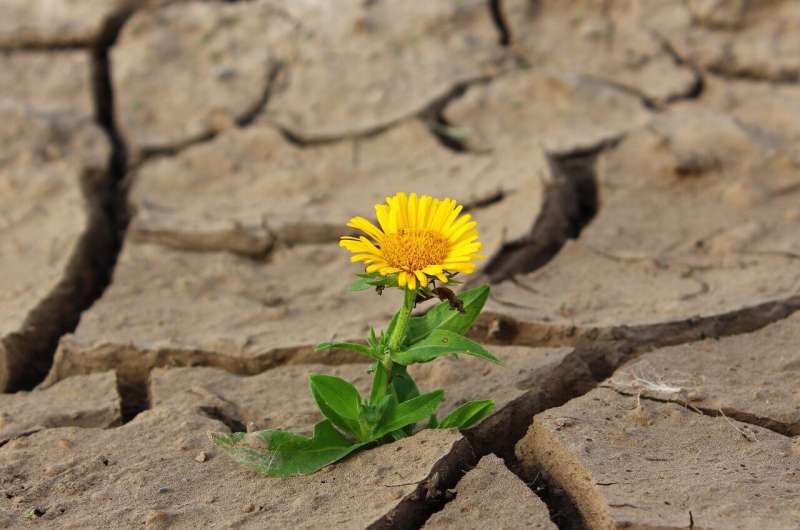
The frequency, intensity, and duration of extreme heat events have risen sharply over the past half century, and the risks to agrifood systems and ecosystems are set to soar in the future, according to "Extreme heat and agriculture," a new report from the Food and Agriculture Organization of the United Nations (FAO) and the World Meteorological Organization (WMO).
"This work highlights how extreme heat is a major risk multiplier, exerting mounting pressure on crops, livestock, fisheries, and forests, and on the communities and economies that depend upon them," said FAO Director-General QU Dongyu.
"Extreme heat is increasingly defining the conditions under which agrifood systems operate," said WMO Secretary-General Celeste Saulo.
"More than simply an isolated climatic hazard, it acts as a compounding risk factor that magnifies existing weaknesses across agricultural systems. Early warnings and climate services like seasonal outlooks are vital to help us adapt to the new reality," she said.
The joint FAO-WMO report describes the physical science of extreme heat, the vulnerabilities, observed and projected impacts on agriculture, adaptation strategies, case studies, and offers policy recommendations.
It was released for Earth Day, which falls on 22 April, highlighting the interconnections between our changing climate, food security, agrisystem and ecosystem health.
Plants, animals, fish, trees and humans
The impact of extreme heat events is relative to the context of when and where they occur.
For the most common livestock species, stress begins at above 25 °C, and a bit lower for chickens and pigs, which are unable to cool themselves by sweating.

Fish can suffer cardiac failure as they struggle to maintain elevated respiration rates in waters where extreme heat events drive dissolved oxygen levels lower. In 2025, more than 90% of the global ocean experienced at least one marine heat wave, according to WMO's State of the Global Climate 2025 report.
For most major agricultural crops, yield declines begin to occur above 30 °C—lower for some crops such as potatoes and barley. Evidence points to a strong correlation between heat waves and wildfires, with longer and more intense fire seasons.
Extreme heat also takes a toll on agricultural laborers. The number of days each year when it is simply too hot to work may rise to 250 per year in much of South Asia, tropical Sub-Saharan Africa, and parts of Central and South America, according to the report.
The full danger of extreme heat lies not only in its direct impacts, but also in its role as a risk multiplier for water stress, flash droughts, and wildfires, or fostering the spread of pests and diseases. The report offers a comprehensive look at such compound effects, including looking at less understood hazards, like flash drought, that are primarily driven by rapid rise in temperature.
Key recommendations
The report points to the need for innovation and the implementation of adaptative measures such as selective breeding and crop choices adjusted to the new climate reality, adjusting planting windows and altering management practices that can shelter crops and agricultural activities from the impacts of extreme heat.
Early warning systems are a particularly important tool in aiding farmers in their efforts to respond to extreme heat.
Access to financial services—cash transfers, insurance and payment schemes, shock-responsive social protection schemes and other forms—underpins all categories of adaptation options.
"Protecting the future of agriculture and ensuring global food security will require not only building on-farm resilience but also exercising international solidarity and collective political will for risk sharing, and a decisive transition away from a high-emissions future," the report says.
