Cities are rewriting growth rules as wealth rises, pollution drops and a long-assumed link starts to break

Lisa Lock
Scientific Editor

Robert Egan
Senior Editor

Paul Arnold
Author
Cities are a double-edged sword. They provide plenty of job opportunities, and most of the world's money is made in them, but on the other hand, they create most of the planet's pollution. For decades, the prevailing view has been that the two go hand in hand. Essentially, if you want cities to prosper even more, you have to accept that there is going to be pollution. But that relationship may be weakening.
An assessment of 2,475 of the world's biggest cities found that 80% are growing their economies while reducing their fossil fuel pollution. The findings are published in the journal Nature Cities.
To track thousands of cities simultaneously, researchers used satellite data to measure tropospheric nitrogen dioxide levels from January 2019 to December 2024. The gas is often used as a stand-in or proxy for fossil fuel combustion because it comes directly from power plants, factories, and tailpipes. "Our approach provides a focused, observable and globally consistent proxy for one central pillar of green growth," noted the team in their paper.
They also looked at the GDP (gross domestic product) for cities with more than 100,000 residents. Putting these two together allowed them to see which cities were getting richer while their air was getting cleaner, and which were growing but burning even more fossil fuel.
The study measured more than 5,000 cities overall, but 2,919 showed no significant change in nitrogen dioxide levels, and were therefore excluded from further analyses.
Global shift to green growth
The findings revealed that China is leading the way with more than 700 cities growing while cleaning their air. These include major centers such as Beijing and Shanghai. In Europe, cities such as Amsterdam, Berlin, and Paris showed a similar pattern. According to the researchers, this is due to policies such as low-emission zones and the electrification of public transport.
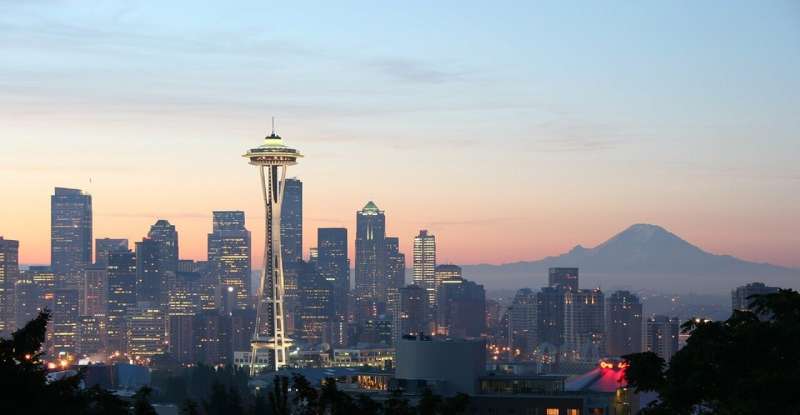
North American cities like Seattle, Vancouver, and San Jose also increased their wealth while reducing pollution levels.

Uneven progress
However, progress is not the same everywhere. About 16% of the cities are still growing by burning more fossil fuels. These tended to be India, Iran, and Russia, where economic expansion is still closely tied to heavy industry and increased traffic. As the study authors noted, "Decoupling fossil fuel pollution and growth is possible (and underway in many cities), but the global picture remains uneven."
While the outlook presented by the paper is encouraging, the research has its limitations. Among these are that nitrogen dioxide is not a perfect proxy for all fossil fuel emissions, and the study period is short and overlapped with the disruptions caused by the COVID pandemic.
Nonetheless, the scientists have developed a useful way to regularly monitor how well urban green policies are working and guide investments toward more sustainable cities.
