Could less caffeine be the smarter performance enhancer? Scientists find a surprising sweet spot

Stephanie Baum
Scientific Editor

Robert Egan
Associate Editor

Sayan Tribedi
Author
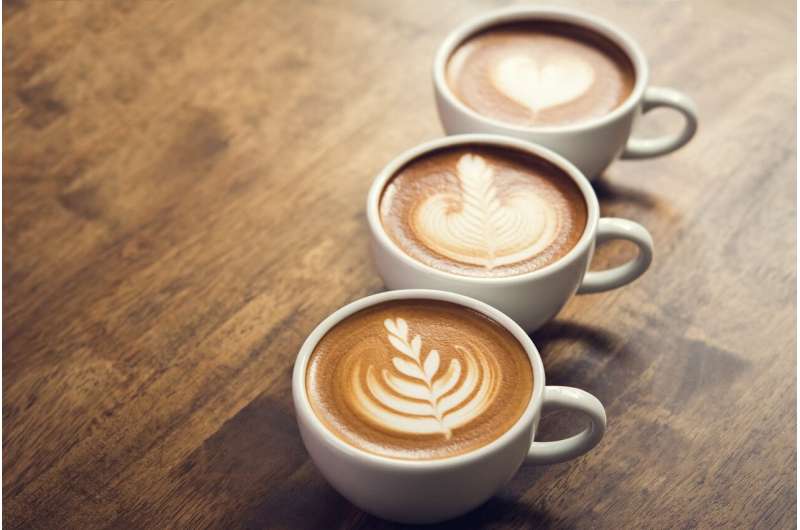
Think of an athlete eyeing the finish line—could a single shot of caffeine be the difference between a podium finish and a personal best? For decades, runners and cyclists have treated the stimulant as a near-magical performance aid, yet the "perfect" dose has remained a subject of locker-room legend and conflicting advice. While some athletes swear by a morning espresso, others push the limits with high-dose supplements, chasing a faster sprint at any cost.
A new analysis, published in the journal Nutrients, has finally put these habits to the test. By scrutinizing 48 separate clinical trials, scientists have mapped exactly how caffeine influences time-trial outcomes in cycling, running and swimming. Their findings challenge the "more is better" mentality, revealing that the threshold for a measurable speed boost—roughly a 2% gain—starts at a much lower dose than many competitors realize.
A modest buzz, a measurable gain?
Official sports experts already hint that moderate doses (about 3–6 mg/kg) bring benefits, whereas mega-doses (9 mg/kg) add little extra speed. Athletes know caffeine wakes you up, but does it genuinely cut race time? The new meta-analysis focused exclusively on "time to complete" races—from short cycling sprints to Ironman triathlons. Remarkably, even low doses (~1.3–3 mg per kg of body weight, about one espresso for a 70-kilogram (154-pound) runner) gave a significant boost.
As the authors note, "This is the first meta-analysis … to demonstrate that pre-exercise ingestion of low caffeine doses (1.3–3 mg·kg⁻¹) can enhance generalized aerobic performance."

Finding the sweet spot
Pushing the dose higher offered an even bigger payoff—up to a point. Moderate intake (4–6 mg/kg, maybe two double espressos) yielded a larger effect: about 2.18% faster finishes on average. The researchers write that moderate doses "appear to produce a more consistent ergogenic effect."
Midlevel caffeine reliably helped more across trials. However, variation between results was large—about 73% heterogeneity, meaning not everyone got the same gain.
Still, the gains are modest. Imagine your usual pace; this study suggests a few sips could trim a few seconds off each mile. The central boost—more alertness, less perceived effort—likely drives this edge.
A key takeaway from this study is that you don't need a buzzkill to benefit. Position statements have long warned that mega-doses (9-plus mg/kg) don't yield extra speed and carry nasty side effects. Indeed, the team found no qualifying trials in which athletes got above 6 mg/kg in a single time trial. That means the question "Do five espressos work?" is still unanswered. As the authors caution, no high-dose race trials were found, underlining how little is known about the effect (or lack thereof) of mega-doses on real race outcomes.
The missing pieces
If caffeine is such a potent tool, why does the data suddenly vanish when the doses get high? Despite its reputation in extreme endurance circles, the researchers hit a surprising wall: They found zero qualifying trials that tested athletes at "mega-dose" levels (above 6 mg/kg) during actual time trials. This leaves a significant portion of the performance curve—the territory where many athletes might be tempted to experiment—shrouded in scientific mystery.
The reason for this gap likely comes down to a brutal tradeoff. While a little caffeine sharpens focus, pushing into the 6–9 mg/kg range often invites a "buzzkill" of side effects, from heart palpitations and jitters to gastrointestinal distress that can ruin a race faster than any stimulant can save it. The study authors are now calling for a new wave of carefully tracked safety trials to finally chart this high-risk territory, warning that until then, athletes taking massive doses are essentially flying blind.
Takeaways for athletes
What's the bottom line? A small caffeine hit can help endurance athletes. Coaches might start trials at around 2–3 mg/kg (about one strong coffee) and see gains while watching for side effects. Upping to 4–6 mg/kg may add a bit more punch, but keep it measured. Crucially, the evidence says you don't need a megadose to go faster—and real-world gains are on the order of a few percent, not a dramatic overhaul.
Finally, note that this research was heavily male-biased (only about 7% of subjects were women), and people vary. Genetics and habits affect caffeine response. The smart strategy is to experiment: Find your personal sweet spot. In short, for most athletes, less is more—a modest caffeine boost can shave seconds off race times without the risks of over-caffeination.
