First Golden Goose Award of 2013 goes to Wallace Coulter
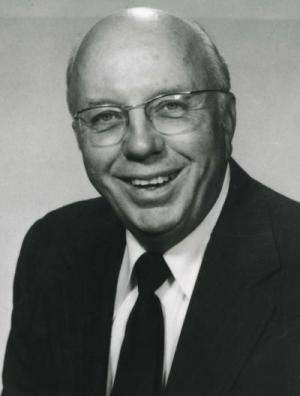
The first Golden Goose Award of 2013 will be awarded to the late Wallace H. Coulter, a researcher and inventor who some fifty years ago turned research on paint for the Navy into the Coulter® Counter™, which remains today a standard machine for counting blood cells rapidly and efficiently. Coulter developed the technology for his invention while working on a grant from the Office of Naval Research (ONR) to improve the paint used on Navy ships.
The Golden Goose Award was created in 2012 to celebrate researchers whose federally funded research seemed odd or obscure but turned out to have a significant, positive impact on society. A representative of the Wallace H. Coulter Foundation will accept the award for Coulter, who died in 1998, at the second annual Golden Goose Awards ceremony in Washington, DC this fall, along with other winners to be named in the coming months.
The Golden Goose Award was originally the idea of Representative Jim Cooper (D-TN) and has the support of a bipartisan group of Members of Congress. It was created by a coalition of organizations, listed below, which believe that federally funded basic scientific research is the cornerstone of American innovation and essential to our economic growth, health, global competitiveness, and national security. Award recipients are selected by a panel of respected scientists and university research leaders.
"Wallace Coulter's discovery exemplifies the combination of genius, hard work, and serendipity that is so often critical to successful science, and that the Golden Goose Award honors," said Rep. Cooper. "When the federal government supports science, some of the most important benefits might have little to do with the original reason for the research. In this case, anybody in the United States or throughout much of the world who has needed a blood test has benefited from federally funded research that started out with a focus on paint."
"Mr. Coulter's request for federal funding of his groundbreaking research would undoubtedly have been ridiculed today," said Representative Charlie Dent (R-PA). "You can almost imagine the pithy sound bites that would be used to denigrate his request – 'Government paying people to watch paint dry' – or something along those lines. Instead, what the American taxpayers received was a technological boon with economic impact across major economic sectors like health and manufacturing. Imagine how many people gained employment because of Mr. Coulter's genius."
"The next time you hear someone disparaging government supported basic research with a one-liner," he added, "realize that they might be mocking a device or process that could bring great benefit to people across the world."
After World War II, the Navy needed thousands of gallons of paint for each of its large armada of ships, but it found that batches of the same color paint actually had different levels of solid particles. Some accounts say this inconsistency caused the same ships to be painted in multiple hues, which would have been unacceptable to the Navy. Other accounts suggest that the inconsistent paint adhered unevenly to surfaces. It might have been both. Regardless, the Navy saw this as a problem that needed to be addressed.
Coulter worked for a number of electronics firms, but he also conducted research outside of work at a laboratory he had set up in his garage. One of these home research projects was through a research grant from ONR to find a method to standardize the solid particles in paint. Coulter thought that if he ran the paint through an opening, he could use an electric current to count the number of particles in the various colors of paint. He created a crude device to achieve this, using a hot needle to puncture a hole in cellophane from a cigarette package, and placing it between two electrodes connected to a source of electric current.
On a miserable evening in the winter of 1947, Coulter returned to the laboratory he maintained in his home garage to find that he had left his paint samples open and they had hardened, making it impossible to use the paint for his research. Undaunted, but not wishing to go out again into the cold night to obtain more samples, he sought a liquid that would flow something like paint. Coulter asked himself what liquid was similar in viscosity to paint. His answer: human blood – his own blood.
Running a sample of his blood through his crude cellophane mechanism, he discovered that blood cells passing through an aperture interrupted the electrical connection and emitted electrical pulses that could be measured. This principle – the use of electronic impedance to count and size microscopic particles, including human blood cells, suspended in a fluid – became the Coulter Principle.
Coulter was also a former medical equipment serviceman, and he remembered seeing laboratory technicians hunched over their microscopes laboriously counting individual blood cells for patients who needed quick answers to their health problems. He realized that the technique he had invented to match paint samples for Navy ships could be used to transform the speed and accuracy of diagnostic blood tests. Coulter pursued a patent – it took him five years – and manufactured a machine he called the Coulter® Counter™.
The Complete Blood Count (CBC) that uses Coulter's invention is the most ordered medical diagnostic test in the world. Coulter's research revolutionized the study of blood, or hematology. Anything that requires an analysis of human blood cells, including rapid medical diagnoses, uses Wallace Coulter's breakthrough discovery. Moreover, the Coulter® Counter™ is used in numerous industries to test the purity of products as wide ranging as cosmetics, food, beer, molten metal, glass, ceramics, and, of course, paint.
The federally funded research Wallace Coulter carried out in his garage was a springboard to a career of scientific discovery and business success that has affected the lives of countless people around the world. Coulter was granted 85 patents over the course of his life, received honorary degrees from multiple universities, and posthumously was inducted into the National Inventors Hall of Fame and given the John Scott Award for Scientific Achievement. The foundation that bears his name continues to support translational research in bioengineering with the goal of improving patient care.
Provided by Association of American Universities
