Best of Last Week–Bacteria that eats plastic, Go champion beat by computer and blueberries fighting Alzheimer's disease


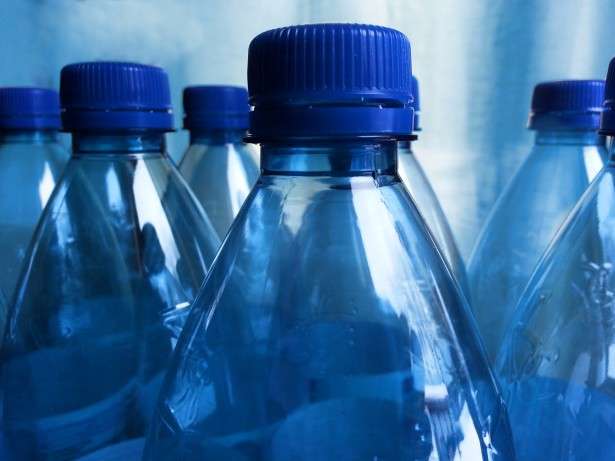
plastic bottles
Credit: Charles Rondeau/ public domain

(Science X)—It was a good week for science and technology, as it was found that a newly discovered type of bacteria can eat plastic bottles—the finding, by a team in Japan, could help get rid of the more than 50 million tons of plastics that are discarded around the world each year. A team of engineers at the University of California conducted an experiment that showed magnetic chips could dramatically increase computing's energy efficiency—and thus, of course, drastically reduce energy usage. A team of researchers at the University of Michigan announced that they had developed a spray-on coating that could ice-proof airplanes, power lines and windshields—when used before icing conditions occur, the clear, rubbery coating could be used to prevent buildup on a wide variety of surfaces. Also, a team of

engineers at Iowa State University announced that they had developed a flexible skin that traps radar waves and cloaks objects—the meta-skin is able to manipulate electromagnetic waves and can be tuned to reduce reflection of radar frequencies. And a computer won a series against a Go champion—a software program developed by Google won its best-of-five match against Go grandmaster Lee Se-Dol.

In other news, an international team of researchers found that human influence on the climate dates back to the 1930s and that human activity was responsible for 16 record-breaking hot years. A team of researchers from the U.S. and Germany reported on the world's oldest chameleon, found preserved in amber—at approximately 100 million years of age, the chameleon is 78 million years older than the previous record holder. And a team at the Perelman School of Medicine announced that they had identified the cause of insulin resistance in type 2 diabetics—high levels of certain amino acids. Also, a team at the National Veterinary Research Institute in Poland found 57 different pesticides poisoned honeybees, some or all of which might be contributing to .

And finally, if you, like millions of other people, love blueberries, or have taken to eating them in light of reports that they help lower heart disease, you might be giving yourself an additional boost: A team of researchers presented their findings at the 251st National Meeting & Exposition of the American Chemical Society, suggesting evidence that the well-known 'super-food' could also help fight Alzheimer's disease.

© 2016 Science X

Citation: Best of Last Week–Bacteria that eats plastic, Go champion beat by computer and blueberries fighting Alzheimer's disease (2016, March 14) retrieved 28 April 2026 from https://sciencex.com/news/2016-03-weekbacteria-plastic-champion-blueberries-alzheimer.html
This document is subject to copyright. Apart from any fair dealing for the purpose of private study or research, no part may be reproduced without the written permission. The content is provided for information purposes only.

Written for you by our author Bob Yirka—this article is the result of careful human work. We rely on readers like you to keep independent science journalism alive. If this reporting matters to you, please consider a donation (especially monthly).

Latest stories

A banned chemical still lingers, and its strangest effect may depend on sex, genes and one common vitamin

In two new studies, researchers at the UC Davis MIND Institute have clarified how a long-banned group of chemicals, called polychlorinated biphenyls (PCBs), affect genetic activity. The research helps explain how biological ...

Light can now be shaped in empty space, and it could simplify sensing and boost data links

Scientists at the University of East Anglia have uncovered a hidden property of light that allows it to twist, spin and behave differently—without mirrors, materials or special lenses. In a breakthrough that could transform ...

Hidden stripe pattern lets microscopes auto-focus across 400 times deeper range

Anyone who has ever used a microscope knows that it takes time to bring a sample into sharp focus. Each time you move the slide, the image blurs, and you have to stop and carefully turn a knob to bring everything back into ...

Digital twin can reveal alcohol consumption in crime cases

Using a so-called digital twin, it is possible to predict with greater precision than at present how much alcohol a person has consumed and at what time. The study was conducted by researchers at Linköping University and ...

Egg-scanning AI may let hatcheries sort life, death and sex before chicks emerge

Eggs and poultry provide important sources of protein globally, driving a major industry with large economic impacts. Challenges to hatchery operations include embryo mortality, fertility, sex determination, and eggshell ...

How bones make marrow: Newly identified 'organizer' cells also reappear after fractures

Bone marrow is the spongy tissue located within the hollow center of bones, serving as the primary site for the continuous production of red blood cells, platelets, and white blood cells. Despite its physiological importance, ...

This AI coach is quietly rewriting how people think about exercise

With so many health apps and wellness coaching gadgets to choose from, it might seem as if the market is already saturated. But commercial health apps often treat coaching as an optimization problem, says Matthew Jörke, a ...

Natural rubber process boosts tire toughness about tenfold while preserving stiffness

Natural rubber, tapped from trees as latex, is the world's most widely used bio-elastomer. Comprising long molecular chains that make it pliable and stretchy yet highly resistant to cracking and strain, natural rubber is ...

Fluorescent quail embryos could help solve serious birth defects in humans

The quail is a small, unassuming bird that glides rather than flies and prefers to hide under bushes than to perch on top of a tree. And now, it's also helping scientists understand serious birth defects in humans.

Investigating the disordered heart of glass

Recent research led by the University of Trento reveals that fundamental atomic vibrations remain unchanged also in ultra-stable glasses. This discovery advances the decade-long debate on the physics of disorder and opens ...