Best of Last Week—Quantum bounds maybe not so quantum, alcohol causing cancer and butter found safer to eat than thougt


quantum bounds
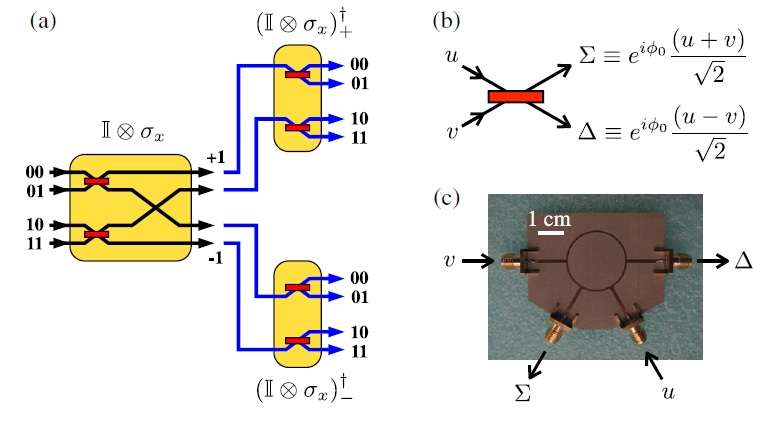
Components of the classical experiment that produces the same bounds that quantum experiments do. Credit: Frustaglia et al. ©2016 American Physical Society

(ScienceX)—It was another good week for physics as a team with the University of Sevilla in Spain, found that 'quantum' bounds are not so quantum after all—the team has shown they also show up in classical experiments suggesting they should not be used as a measure of quantumness. Also another team with Penn State University claimed to have found a new, better way to build circuits for the world's first useful quantum computers—they used lasers and microwaves to better control switching of qubits between states.

In news about the planet, a team of researchers at Stanford found a 'water windfall' beneath California's Central Valley—they claim there is three times as much water below the surface there as has been previously thought. Also another team of researchers from Oxford and Durham universities announced a huge helium discovery described as 'a life-saving find'—the discovery was made using a new approach they developed for gas exploration. And a team made up of researchers from several institutions in the U.S. and the U.K. reported that they had observed the first signs of healing in the Antarctic ozone layer, which they described as "the first fingerprints of healing."

In other news, a team of researchers with the Dana-Farber Cancer Institute collaborating with a group at the University of California announced that they had identified a calorie-burning pathway in fat cells which allows cells to burn calories as heat instead of storing them as fat—a possible way to combat obesity. Also a new artificial intelligence system beat tactical experts in a combat simulation—the simulation system, developed by Psibernetix, Inc., reportedly beat a retired Air Force flying ace. And a team of at the University of Otago, working with the Global Burden of Disease Alcohol Group reported on a study where they found that alcohol consumption contributes to cancer, even in moderate drinkers—they claim alcohol was responsible for 236 cancer deaths in New Zealand in 2012. Also, a team at the University of Stuttgart released details of a micro-camera that can be injected with a syringe—the whole camera is about the size of a single grain of salt and is likely to have many applications beyond healthcare.

And finally, if you are one of the millions of people who were warned against putting butter on your foods because it would give you heart trouble, your worries may be over—a team at Tufts University found little to no association between butter consumption and chronic disease or total mortality.

© 2016 ScienceX

Citation: Best of Last Week—Quantum bounds maybe not so quantum, alcohol causing cancer and butter found safer to eat than thougt (2016, July 4) retrieved 5 May 2026 from https://sciencex.com/news/2016-07-weekquantum-bounds-quantum-alcohol-cancer.html
This document is subject to copyright. Apart from any fair dealing for the purpose of private study or research, no part may be reproduced without the written permission. The content is provided for information purposes only.

Written for you by our author Bob Yirka—this article is the result of careful human work. We rely on readers like you to keep independent science journalism alive. If this reporting matters to you, please consider a donation (especially monthly).

Latest stories

Burned stone, child's bones, and lost jewelry hint at prehistoric mining camp high in the Pyrenees

In the past, scientists thought that prehistoric peoples only traveled briefly through high-altitude mountain areas, rather than staying to take advantage of their resources. But new evidence suggests that, starting about ...

A simple physics-inspired model sheds light on how AI learns

Artificial intelligence systems based on neural networks—such as ChatGPT, Claude, DeepSeek or Gemini—are extraordinarily powerful, yet their internal workings remain largely a "black box." To better understand how these systems ...

Politicians are not ignoring you, statistical analysis suggests

If you're registered to vote in the United States and you're not among the richest of the rich, political scientist Peter K. Enns has a message for you: Your voice still matters. So does data analysis methodology.

AI-powered lab discovers brighter lead-free nanomaterials in 12 hours

A new autonomous laboratory recently navigated through billions of potential material synthesis recipes to identify brighter, lead-free light-emitting nanomaterials in just 12 hours. The work could accelerate development ...

Antibiotic-resistant bacteria turn up in six lakes, with urban waters hit hardest

A team of scientists from Berlin analyzed water and sediment samples from six water bodies in Berlin and the adjacent federal states of Brandenburg and Mecklenburg-Western Pomerania, as well as the inflow and outflow of a ...

Climate change increases spillover risk of rodent-borne arenaviruses, study warns

Climate change is likely to drive rodent-borne arenaviruses into parts of South America that have never faced these diseases, putting new communities of people at risk, finds a study from the University of California, Davis. ...

Hidden risk pushes 459 Northwest communities higher on wildfire danger scale

A new wildfire risk assessment tool that takes social vulnerability into account indicates that more than 400 communities in the Pacific Northwest are at greater risk than previously thought. However, researchers at Oregon ...

New insight could change how we break down 'forever chemicals'

PFAS, often called "forever chemicals," are notoriously difficult to remove from the environment. Their extreme chemical stability means they can persist in water and the human body for decades, creating a major global pollution ...

Here's why your face doesn't perceive itchiness the same way your body does

In a new study, researchers from North Carolina State University show that itch sensations in the face are perceived differently from those in the body due to differences in signaling between trigeminal (located in the brain) ...

Synchrotron X-rays uncover hidden protein binding sites, enabling two new functions

Using bright X-rays from the Department of Energy's SLAC National Accelerator Laboratory and Lawrence Berkeley National Laboratory (Berkeley Lab), researchers pioneered an innovative approach to designing proteins with targeted ...