Best of Last Week—Super-Earth atmosphere found, a Star Wars superlaser may be possible and Marmite as brain food


Atmosphere around super-Earth detected
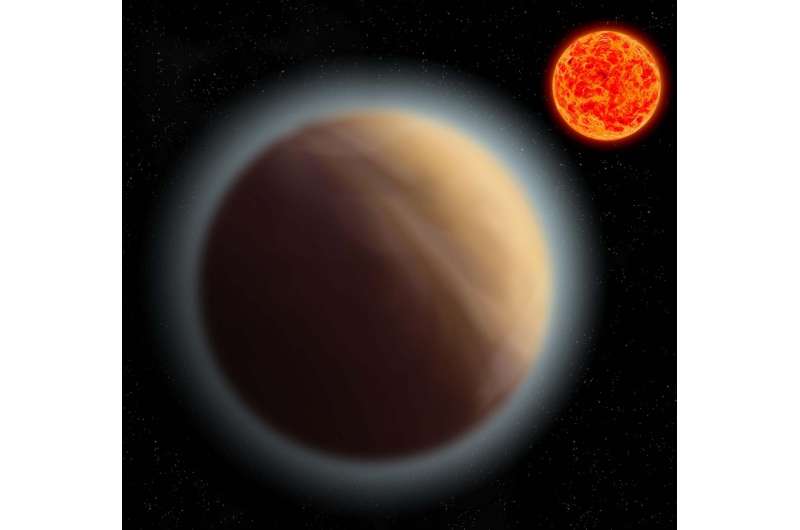
An artist's impression. Credit: Max Planck Society

(ScienceX)—It was a good week for space news as a team of researchers in Europe announced that the detection of an atmosphere around a super-Earth—the finding around GJ 1132b was the first for a low-mass super-Earth. Also, an international team of researchers confirmed that mysterious bursts of energy do come from outer space—the short bursts of fast radio waves have been one of astronomy's great mysteries over the past decade and their actual source is still unknown. And a team at NASA announced that the Cassini mission was preparing for a "grand finale" at Saturn. This month, it will begin flying in the area between Saturn's rings and the planet's surface before running out of fuel.

Also in technology news, a at The University of Manchester developed a graphene sieve that turns seawater into drinking water proving that graphene could be used to filter common salts from water. Also, a team at Macquarie University proved that a Star Wars "superlaser" may no longer be sci-fi—they found a way to multiply laser power using diamonds. And a team led by Daniel Nocera announced that it would be presenting details of a 'bionic leaf' that could feed the world at this year's National Meeting & Exposition of the American Chemical Society.

In other news, a combined team of researchers from the University of Chicago and Yale and Cornell universities found that book purchases of liberals and conservatives reveal partisan division. Also, a team at Rockefeller University announced that they had identified the "night owl" gene variant of the CRY1 gene—it was found to slow the . And a team with members from several institutions in the U.S. explained the innovation of "fluting" ancient stone weaponry that contributed to the survival of Clovis hunters in North America.

And finally, if you have been looking for ways to keep your brain healthy, you might want to note the findings by a team with the University of York in England—they found evidence suggesting that Marmite may be brain food. The yeast extract is commonly used as a spread in Britain, and it appears that ingesting it bolsters a vital neuron chemical.

© 2017 ScienceX

Citation: Best of Last Week—Super-Earth atmosphere found, a Star Wars superlaser may be possible and Marmite as brain food (2017, April 10) retrieved 30 April 2026 from https://sciencex.com/news/2017-04-weeksuper-earth-atmosphere-star-wars-superlaser.html
This document is subject to copyright. Apart from any fair dealing for the purpose of private study or research, no part may be reproduced without the written permission. The content is provided for information purposes only.

Written for you by our author Bob Yirka—this article is the result of careful human work. We rely on readers like you to keep independent science journalism alive. If this reporting matters to you, please consider a donation (especially monthly).

Latest stories

Human cell map uncovers 90,000 interactions among 4 million gene pairs

How do our genes determine our appearance and our susceptibility to disease? This question is central to biomedical research, and today we can sequence thousands of human genomes to identify these genes. However, genes work ...

Why pedestrian deaths keep rising: AI spots rare crash patterns where targeted fixes could save lives

On average, car crashes cause more than 40,000 deaths per year in the United States. Technologies like seat belts, advanced airbags, and automated braking systems have improved car driver and passenger safety, but pedestrian ...

Superconducting quantum circuit simulates proton tunneling phenomenon in chemical systems

Researchers at Yale, Google, and the University of California-Santa Barbara have created a device that simulates the quantum "tunneling" behavior of protons that occurs in chemistry, a process so common it occurs in everything ...

Collective intelligence framework shows how human-AI teams may make better decisions

As artificial intelligence (AI) becomes embedded in critical decisions about health, safety, finance, and governance, a key challenge is no longer whether people and AI will collaborate, but rather how to structure this collaboration ...

Light-activated protein illuminates when embryos can cope with disruptions to cell division

Cell division during the early stage of embryo development is a trade-off between speed and accuracy; the cells need to divide quickly to enable rapid growth, but it's important not to introduce errors that could be fatal ...

Malaria parasite sneaks mRNA into immune cell nuclei, disrupting defenses

RNA technology is regarded as one of the newest frontiers in medicine, but in fact a primordial innovator got there way before we did. The malaria parasite, an ancient single-celled organism, has been using sophisticated ...

Treatment of rare childhood epilepsy could begin before birth

Research has shown early diagnosis and treatment of epilepsy disorders can improve outcomes. The question of when to administer treatment so it gets ahead of the disease, however, has remained stubbornly elusive. A new Northwestern ...

Chemists unlock two-step alkene alkylation using stable acids and polar coupling

Chemists at the Max-Planck-Institut für Kohlenforschung have developed a practical two-step method for alkylating alkenes via thianthrenation, addressing a long-standing synthetic challenge. This breakthrough simplifies complex ...

Light unlocks full polarization control at ultrafast speeds, reshaping photonics

Scientists at Heriot‑Watt University have demonstrated in a world-first, that light can be used to control every aspect of how electromagnetic waves oscillate, opening new technological frontiers. Researchers working in photonics, ...

No live animal testing needed: Lab-grown airway organoids reveal viral infection in wildlife species

Experimental infections, where a pathogen is introduced into the host body to see its effects in action, are considered the gold standard for assessing how vulnerable a host is, offering clear insights into how a pathogen ...