Best of Last Week – Measuring pressure inside a proton, flying wireless robot insects and yogurt may treat inflammation

Bob Yirka
Author
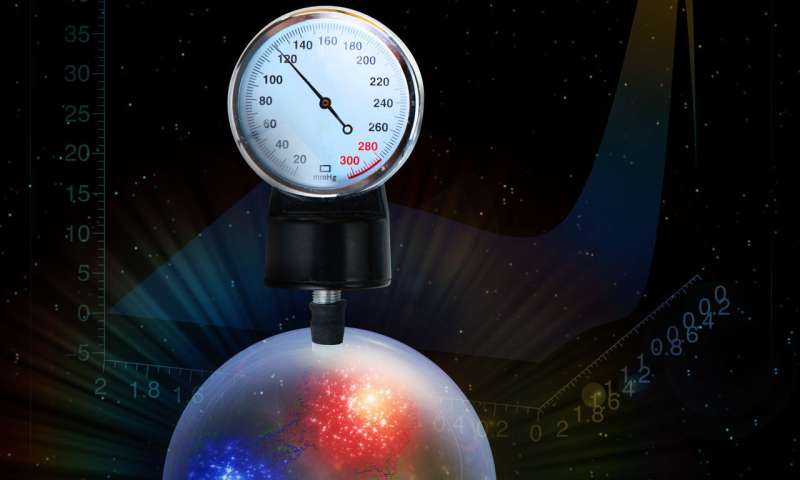
It was a good week for physics as a team at the U.S. Department of Energy's Thomas Jefferson National Accelerator Facility conducted the first measurement of a subatomic particle's mechanical property, revealing the distribution of pressure inside of a proton—and it turned out to be 10 times that of the pressure inside of a neutron star. Also, a new quantum probability rule offered a novel perspective of wave function collapse. The work done by a team at the University of Queensland resulted in a unified probability rule that they call the "Quantum Process Rule." And a team with members from the U.K. and Australia wondered if a multiverse could be hospitable to life. Their work suggested it might be more of a possibility than previously thought.
In technology news, a team with members from the Center for Free-Electron Laser Science in Germany and Uppsala University in Sweden announced that they had developed the world's fastest water heater, which increased a sample by 100,000 degrees in under a 10th of a picosecond. And a team of engineers at the University of Washington unveiled the first wireless flying robotic insect. They reported that it weighs less than a toothpick and was powered by a laser beam.
In other news, a team in France found that Hitler definitely died in 1945—their study of his teeth conclusively showed they were the German dictator's. Also, a team at UCLA announced that they had "transferred" a memory from one marine snail to another by transplanting RNA from one of them to the other. And an international team of researchers discovered that emissions of a banned ozone-eating chemical are somehow rising—they believe they are being released from somewhere in Asia. Also, a team led by a group at NASA reported that a satellite study found major shifts in global freshwater—wetter areas are getting wetter and drier areas drier, they found.
And finally, if you are one of the millions suffering from some form of chronic inflammation, help might be as close as the refrigerator—a team at the University of Washington-Madison found that yogurt may dampen chronic inflammation linked to multiple diseases.
