Best of Last Week – Stephen Hawking's last theory, sauna bathing reducing stroke risk and health benefits of walnuts


Taming the multiverse—Stephen Hawking’s final theory about the big bang
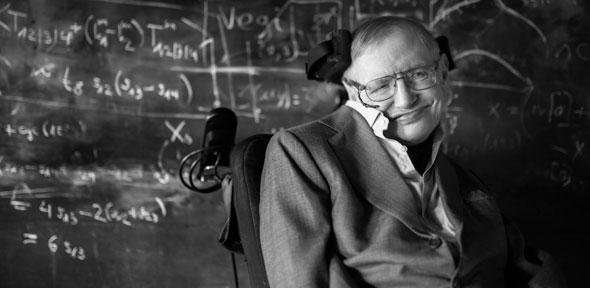
Stephen Hawking. Credit: Andre Pattenden

It was a big week for physics as Stephen Hawking's final theory about the Big Bang was published. The paper was written in collaboration with Thomas Hertog and suggests the universe is not only finite but is much simpler than current theories suggest. Also, a team at Yale discovered signs of a time crystal—a form of matter that "ticks" when exposed to an electromagnetic pulse.

In technology news, a team at Stanford announced that they had developed a water-based battery to store solar and wind energy. The prototype manganese-hydrogen battery is just three inches tall and can generate 20 milliwatt-hours of electricity. They suggest that once it is scaled up, it could serve as a grid-scale battery with a useful lifespan well in excess of a decade. Also, a team of engineers at the University of Buffalo upgraded an ancient, sun-powered tech to purify water with near-perfect efficiency—it involves draping carbon-dipped paper in an upside down "V."

In other news, a team of researchers at the University of Toronto announced that they had developed a portable 3-D skin printer to repair deep skin wounds. The hand-held device deposits even layers of skin directly on wounds, helping them to heal. Also, an international team of researchers concluded that the Earth's magnetic field is not about to reverse as some have speculated. And a team at the University of Kansas studied DNA sequences suggesting that just 250 people made up the original Native American founding population. And another international team of archaeologists found new stone artifacts that showed early humans were in the Philippines 700,000 years ago. Also, another international team of researchers found that frequent sauna bathing reduces the risk of stroke—the 15-year study showed people who regularly visited a sauna were 61 percent less likely to experience a stroke.

And finally, if you are one of the millions around the world looking for a relatively easy way to improve your health, you might try eating some nuts, as a team at the University of Illinois found that walnuts impact the gut microbiome and improve health by reducing LDL-cholesterol levels in adults.

© 2018 Science X

Citation: Best of Last Week – Stephen Hawking's last theory, sauna bathing reducing stroke risk and health benefits of walnuts (2018, May 7) retrieved 27 April 2026 from https://sciencex.com/news/2018-05-week-stephen-hawking-theory-sauna.html
This document is subject to copyright. Apart from any fair dealing for the purpose of private study or research, no part may be reproduced without the written permission. The content is provided for information purposes only.

Written for you by our author Bob Yirka—this article is the result of careful human work. We rely on readers like you to keep independent science journalism alive. If this reporting matters to you, please consider a donation (especially monthly).

Latest stories

Bacterial defense system builds DNA in unexpected new way to stop viruses

Scientists at Stanford University have discovered that DRT3, a unique defense system found in bacteria, creates DNA to protect against viral infections. DRT3 is made up of two different enzymes called reverse transcriptases, ...

Memory breaks old divide as brains track details and patterns simultaneously

Our memory records details and detects patterns in everyday life—often without us even realizing it. Researchers at Lund University have for the first time succeeded in showing that the brain does both these things simultaneously ...

What are dark galaxies? Astronomers expose 70 hidden candidates with no visible stars

Galaxies are not always teeming with vibrant, hot young stars. Sometimes, they are rich in gas and dark matter but have very few or no stars, making them extremely difficult to detect. They are called "dark galaxies" and ...

Motion-enhanced sensor captures ultra-high-resolution images, overcoming a pixel miniaturization bottleneck

Digital image sensors (DIS), devices that capture images by converting light patterns into electrical signals, are integrated in many contemporary electronic devices, including smartphones, digital cameras and some medical ...

An interplanetary shortcut can speed up trips to Mars

Whether it's robotic rovers heading to Mars or, one day, a crew of astronauts, a round-trip journey is an incredibly long one. But there may be a way to find a shortcut. A new study published in the journal Acta Astronautica ...

No batteries, just body heat: Demonstrating the potential of battery-free sensing

As devices for wireless sensing systems become smaller and more complex, finding suitable power sources for them is becoming increasingly difficult. However, advances in low-power sensing technology may allow such systems ...

Improving animal welfare in the lab: AI helps better detect pain

At first glance, the white plastic box with a bright orange floor looks like something for storing children's toys. However, the box isn't used to store Lego bricks; it contains real mice—with the aim of minimizing their ...

AI's power bill just got easier to predict before the next data center surge

Due to the explosive growth of artificial intelligence, it is estimated that data centers will consume up to 12% of total U.S. electricity by 2028, according to the Lawrence Berkeley National Laboratory. Improving data center ...

AI tool may spot ADHD years before children are diagnosed

Attention-deficit/hyperactivity disorder (ADHD) affects millions of children, yet many go years without a diagnosis, missing the chance for early support that can change long-term outcomes even when early signs are present. ...

Why dolphins swim so fast: The secrets of hidden whirlpools

Dolphins are famous for their speed and agility in the water, but what exactly allows them to swim so effectively? Scientists have been asking this question for years, hoping to learn how to optimize propulsion in fluids ...