Best of Last Week – Bread made before agriculture started, a telomere breakthrough and shortcomings of omega-3


Archaeologists discover bread that predates agriculture by 4,000 years
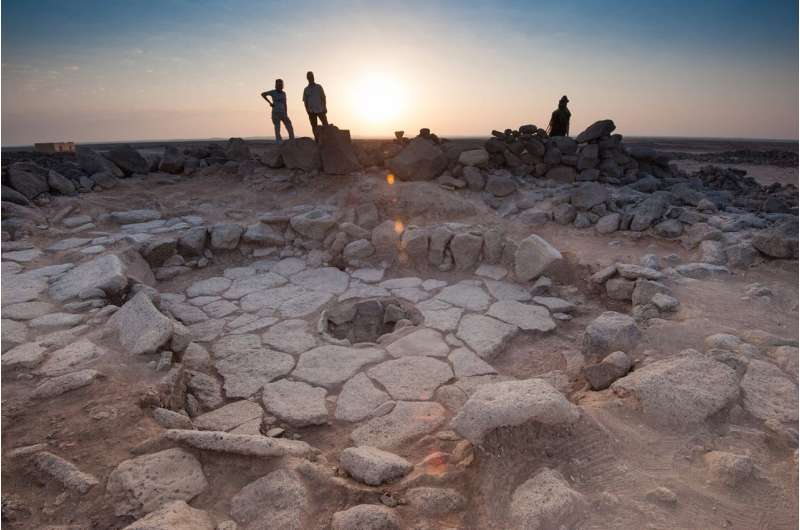
One of the stone structures of the Shubayqa 1 site. The fireplace, where the bread was found, is in the middle. Credit: Alexis Pantos

It was a good week for historical science as a team with members from the University of Copenhagen, University College London and the University of Cambridge discovered the charred remains of bread that predates agriculture by 4,000 years—and possibly offers clues regarding initial cultivation of cereals. And a team with the University of Utah reported on a newly discovered armored dinosaur from Utah that revealed an intriguing family history—it looked similar to dinosaurs uncovered in Asia. And a team at the University of Alberta announced the first fossilized snake embryo ever discovered and suggested the find will rewrite the history of ancient snakes.

It was a good week for technology, as well, as a team at Cornell University announced that they had developed an electron microscope detector that achieves record resolution—and does away with special aberration correctors. Also, a team at Stanford University announced that they had moved closer to a completely optical artificial neural network by demonstrating that it is possible to train an directly on an optical chip. And a team at Tsinghua University announced that they had built a hybrid device that harvests both mechanical and magnetic energy from ambient wasted energy.

In other news, a team with members from Vanderbilt University and Argonne National Laboratory found that safe solid-state lithium batteries heralded a "paradigm shift" in energy storage, due to recent advances in the use of a solid non-flammable ceramic electrolyte known as garnet. Also, a team in Australia announced that they had made a breakthrough that could impact cancer, aging and heart disease involving telomere biology—they suggest its structure, not its length, is what is important. And a team from the University of Wisconsin and Oak Ridge National Laboratory announced that they had developed an eagle-eyed algorithm that outdoes human experts in detecting and analyzing microscopic-scale radiation damage to materials under consideration for nuclear reactors

And finally, if you are one of the millions around the world talking omega-3 as a dietary supplement hoping it will help you avoid heart problems, you might be fooling yourself, as a team in the U.K. found that omega-3 supplements have little or no heart or vascular health benefit.

© 2018 Science X

Citation: Best of Last Week – Bread made before agriculture started, a telomere breakthrough and shortcomings of omega-3 (2018, July 23) retrieved 24 April 2026 from https://sciencex.com/news/2018-07-week-bread-agriculture-telomere-breakthrough.html
This document is subject to copyright. Apart from any fair dealing for the purpose of private study or research, no part may be reproduced without the written permission. The content is provided for information purposes only.

Written for you by our author Bob Yirka—this article is the result of careful human work. We rely on readers like you to keep independent science journalism alive. If this reporting matters to you, please consider a donation (especially monthly).

Latest stories

Re-engineered human cells boost gene-editing particle potency across multiple delivery systems

Gene editing has emerged as a powerful approach for targeting the genetic causes of disease, but getting the editing machinery into the right cells efficiently, safely, and at the scale needed for therapies remains one of ...

Bipartisan-cited science is rarely used by policymakers, study finds

Past research has shown that even though science is commonly viewed as essential for effective policymaking, Democrats and Republicans cite different scientific research when creating policy—even when addressing the same ...

Whole-body ultrasound captures full cross-sections in 10 seconds, early tests show

Ultrasounds are a critical part of modern health care, helping to image soft tissue and organs, measure blood flow, and monitor fetal development. But the technique has constraints, including a limited field of view and the ...

Plato aces space-like tests, keeping hunt for Earth-like worlds on track

The European Space Agency Plato mission has successfully completed a series of tough tests under space-like conditions. With this accomplishment, the spacecraft is on track to lift off in early 2027 and begin its search for ...

Machine learning identifies catalyst 'sweet spot' for greener urea from waste gases

Urea is an extremely important chemical, especially for fertilizers. But, making urea is energy intensive and relies heavily on fossil fuels. However, new findings from Griffith University and the Queensland University of ...

Label-free optical imaging enables automated measurement of human white matter microstructure

White matter pathways allow distant parts of the brain to communicate, supporting memory, emotion, and language. One such pathway, the uncinate fasciculus, connects the front of the temporal lobe with regions of the frontal ...

Simplifying clean hydrogen production with a new all-in-one photocatalytic cocatalyst

Researchers have demonstrated the first "all-in-one" cocatalyst for photocatalytic overall water splitting, a breakthrough that could simplify the production of clean hydrogen fuel. The discovery marks an important step toward ...

Targeting lost pleasure lifts depression and anxiety more than standard therapy, new study finds

Most people know depression as a disorder of sadness. But for millions of patients, the most debilitating feature is something else entirely: the reduced ability or inability to feel positive emotions.

Natural-language AI helps chemists design molecules step by step

Designing molecules is one of chemistry's most complex challenges. From life-saving drugs to advanced materials, each compound requires a precise sequence of reactions. Planning these steps demands both technical knowledge ...

Human-altered estuaries now drive stronger tides farther inland

A study led by Wageningen University & Research shows that human interventions have significantly changed tides in river estuaries over the past centuries. In many regions around the world, the difference between high and ...