Best of Last Week – Reversing time, curing blindness with genes and the health dangers of eating eggs


egg
Credit: CC0 Public Domain

It was a good week for space news as an international team reported on how they had observed the formation sites of solar-system-like planets. Using data from the Atacama Large Millimeter/submillimeter Array the team found two rings of dust around a star, at distances comparable to the asteroid belt and the orbit of Neptune. And a team with members from institutions in Japan, Taiwan and the U.S. announced that they had found evidence of 83 supermassive black holes in the early universe.

It was also a big week for technology advancement as an international team reported that they had measured near-perfect performance in low-cost semiconductors using quantum dots. Also, a team with members from Swisscom and EPFL outlined a new approach to overcoming multi-model forgetting in deep neural networks, possibly paving the way for processing applications that can work well on more than one type of task. In related research, a team at SRI international outlined a generative memory approach to enabling lifelong reinforcement learning. And a team at USC Viterbi School of Engineering showed off a robotic leg that was born without prior knowledge as it learned to walk. Also, a team at the Imperial College of London demonstrated an ability to 4-D print multi-metal products with a desktop electrochemical 3-D printer. 4-D printing adds the dimension of transformation over time.

In other news, a team from the Moscow Institute of Physics and Technology along with partners in Switzerland and the U.S., made headlines when they announced that they had reversed time using a quantum computer. They returned the state of a quantum computer a fraction of a second into the past. And a team at the University of California announced that with a single gene insertion, blind mice had regained sight that they had lost due to retinal degeneration.

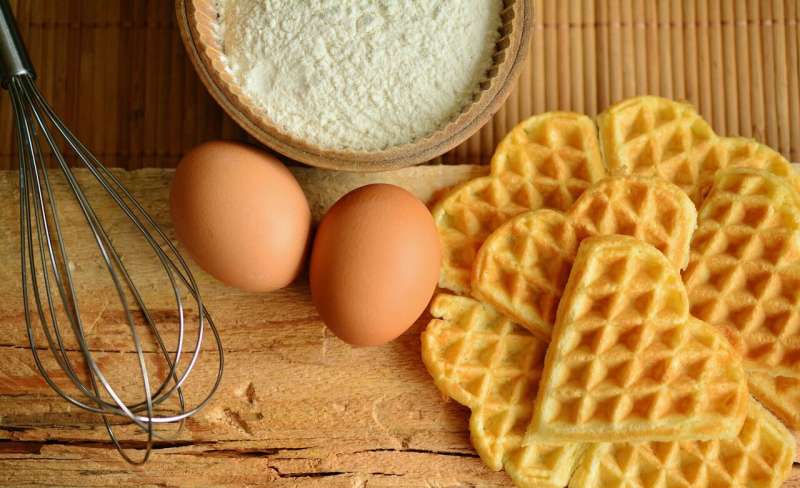
And finally, for those who have begun to feel comfortable eating again after much waffling by scientists regarding the health dangers of eating them—you might want to put down that fork as a team at Northwestern University found that higher egg and cholesterol consumption hikes heart disease and death risk

© 2019 Science X Network

Citation: Best of Last Week – Reversing time, curing blindness with genes and the health dangers of eating eggs (2019, March 18) retrieved 6 May 2026 from https://sciencex.com/news/2019-03-week-reversing-genes-health-dangers.html
This document is subject to copyright. Apart from any fair dealing for the purpose of private study or research, no part may be reproduced without the written permission. The content is provided for information purposes only.

Written for you by our author Bob Yirka—this article is the result of careful human work. We rely on readers like you to keep independent science journalism alive. If this reporting matters to you, please consider a donation (especially monthly).

Latest stories

Hourglass nanographenes unlock strong, robust multi-spin entanglement

Researchers from the National University of Singapore (NUS) and collaborators have developed a predictive design strategy for creating graphene-like molecules with multiple interacting spins and enhanced resilience to magnetic ...

Antimalarial drug hunt uncovers enzyme target with potent new inhibitors

Researchers from the Universities of Bath and Leeds (UK) have made a significant advance in the fight against malaria by uncovering a promising new potential target for drug discovery. The findings, published in the Journal ...

Sound waves create mist that can act like 'plant sunscreen'

RMIT University researchers have developed a new way to coat fragile surfaces, including living plant leaves, using high‑frequency sound waves to create a fine mist that can act like a plant sunscreen.

Researchers discover a new pathway to building energy-efficient computing chips

The growing popularity of electronic devices—from fitness trackers and laptops to smartphones—is driving demand for more energy-efficient computing chips. Now, researchers have found a way to change the electronic properties ...

Why zebrafish hearts heal so well: Early immune signals can improve repair even further

When the human heart is damaged by a heart attack, stiff scar tissue eventually forms around the affected areas. This weakens the heart's pumping ability and increases the risk of heart failure and arrhythmias. Zebrafish, ...

Rare footage of elusive sea-floor creatures and backward-swimming fish captured by compact video-acoustic system

Arctic glacial fjords are hotspots of marine life, yet their seafloor environments remain some of the least explored regions on Earth. Their extreme remoteness and the technical challenges of deep-water observation have led ...

Clean energy's nickel rush is heading straight for some of Earth's richest ecosystems

Meeting future nickel demand for stainless steel and clean energy technologies will require tough decisions with potential environmental trade-offs, a new study has found. Dr. Jayden Hyman from The University of Queensland's ...

Cold-triggered ion channel in bacteria may point to broader temperature-sensing mechanism

All lifeforms need to continuously adapt to temperature changes to survive. Now, Weill Cornell Medicine investigators studying a bacterial protein have identified a new mechanism of sensing cold temperatures. The finding ...

Controlled peanut intake may reduce allergies in toddlers

Researchers at Karolinska Institutet have successfully treated children aged 1–3 years with peanut allergies. The children slowly became accustomed to eating peanuts by consuming small amounts of them daily, which were gradually ...

Direct-to-proteasome strategy degrades two cancer proteins and may curb drug resistance

A preclinical study has developed a strategy that enables the forced elimination of proteins that help tumors survive chemotherapy. This finding opens a new avenue to tackle resistance to cancer treatments, one of the major ...