The ocean's 'gut flora': How bacteria affect ocean health from Antarctica to the equator

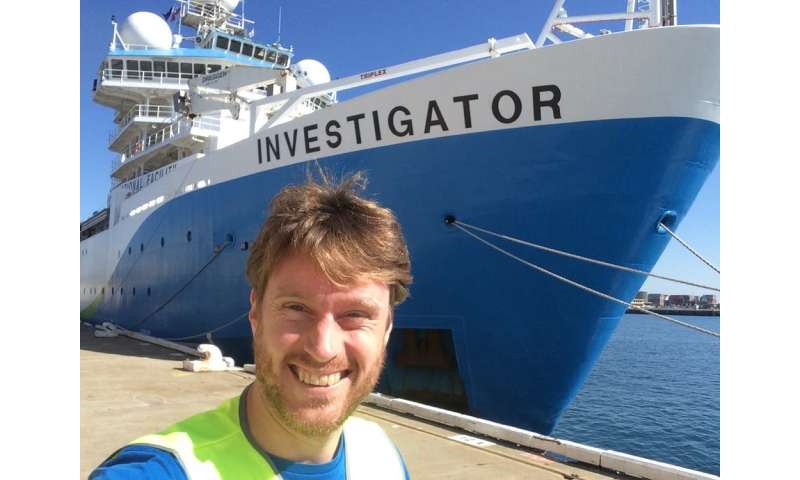
Aboard an Australian research vessel, the RV Investigator, we sailed for 63 days from Antarctica's ice edge to the warm equator in the South Pacific and collected 387 water samples.
Our goal? To determine how the genetic code of thousands of different micro-organisms can provide insights into the ocean's functional diversity—the range of tasks performed by bacteria in the ocean.
Our research was published yesterday in Nature Communications. It showed how bacteria can help us measure shifts in energy production at the base of the food web. These results are important, as they highlight an emerging opportunity to use genetic data for large-scale ecosystem assessments in different marine environments.
In light of our rapidly changing climate, this kind of information is critical, as it will allow us to unpack the complexity of nature step by step. Ultimately, it will help us mitigate human pressures to protect and restore our precious marine ecosystems.
Why should we care about marine bacteria?
The oceans cover 71% of our planet and sustain life on Earth. In the upper 100 meters, the sunlit part of the oceans, microscopic life is abundant. In fact, it's responsible for producing up to 50% of all the oxygen in the world.
Much like the link recently established between human health and the human microbiome ("gut flora"), ocean health is largely controlled by its bacterial inhabitants.
But the role of bacteria go beyond oxygen production. Bacteria sustain, inject and control the fluxes of energy, nutrients and organic matter in our oceans. They provide the energy and food for the entire marine food web, from tiny crustaceans to fish larvae, whales and the fish we eat.
These micro-organisms also execute key roles in numerous biogeochemical cycles (the carbon, nitrogen, phosphorus, sulfur and iron cycles, to name a few).
So, it's important to quantify their various tasks and understand how the different bacterial species and their functions respond to environmental changes.
Fundamental questions
Global ocean research initiatives—such as GO-SHIP and GEOTRACES—have been measuring the state of oceans in expeditions like ours for decades. They survey temperature, salinity, nutrients, trace metals (iron, cobalt and more) and other essential ocean variables.
Only recently, however, have these programs begun measuring biological variables, such as bacterial gene data, in their global sampling expeditions.
Including bacterial gene data to measure the state of the ocean means we can try to fill critical knowledge gaps about how the diversity of bacteria impacts their various tasks. One hypothesis is whether a greater diversity of bacteria leads to a better resilience in an ecosystem, allowing it to withstand the effects of climate change.
In our paper, we addressed a fundamental question in this global field of marine microbial ecology: what is the relationship between bacterial identity and function? In other words, who is doing what?
What we found
We showed it's possible to link the genetic code of marine bacteria to the various functions and tasks they execute, and to quantify how these functions changed from Antarctica to the equator.
The functions that changed include taking in carbon dioxide from the atmosphere, bacterial growth, strategies to cope with limited nutrients, and breaking down organic matter.
Another key finding is that "oceanographic fronts" can act as boundaries within a seemingly uniform ocean, resulting in unique assemblages of bacteria with specific tasks. Oceanographic fronts are distinct water masses defined by, for instance, sharp changes in temperature and salinity. Where the waters meet and mix, there's high turbulence.
The change we recorded in energy production across the subtropical front, which separates the colder waters from the Southern Ocean from the warmer waters in the tropics, was a clear example of how oceanographic fronts influenced bacterial functions in the ocean.
Tracking changes in our ecosystems
As a result of our research, scientists may start using the functional diversity of bacteria as an indicator to track changes in our ecosystems, like canaries in a coal mine.
So the functional diversity of bacteria can be used to measure how human growth and urbanization impact coastal areas and estuaries.
For example, we can more accurately and holistically measure the environmental footprint of aquaculture pens, which are known to affect water quality by increasing concentrations of nutrients such as carbon, nitrogen and phosphorus—all favorite elements utilized by bacteria.
Likewise, we can track changes in the environmental services rendered by estuaries, such as their important role in removing excessive nitrogen that enters the waterways due to agriculture run-off and urban waste.
With 44% of the world's population living along coastlines, the input of nitrogen to marine ecosystems, including estuaries, is predicted to increase, putting a strain on the marine life there.
Ultimately, interrogating the bacterial diversity using gene data, along with the opportunity to predict what this microscopic life is or will be doing in future, will help us better understand nature's complex interactions that sustain life in our oceans.
